
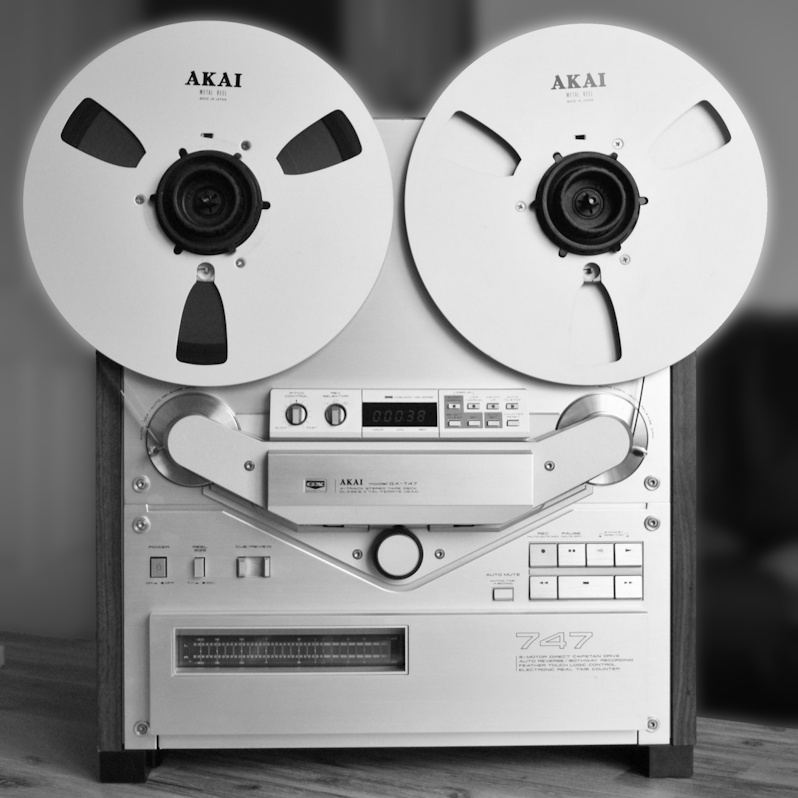
There’s something uniquely satisfying about bringing a vintage reel-to-reel tape recorder back to life, and the Akai GX-747 is a perfect example of the reason why. Designed with precision, built with attention to details, this machine represents a golden era of analog audio — when engineering and art were walking hand in hand.
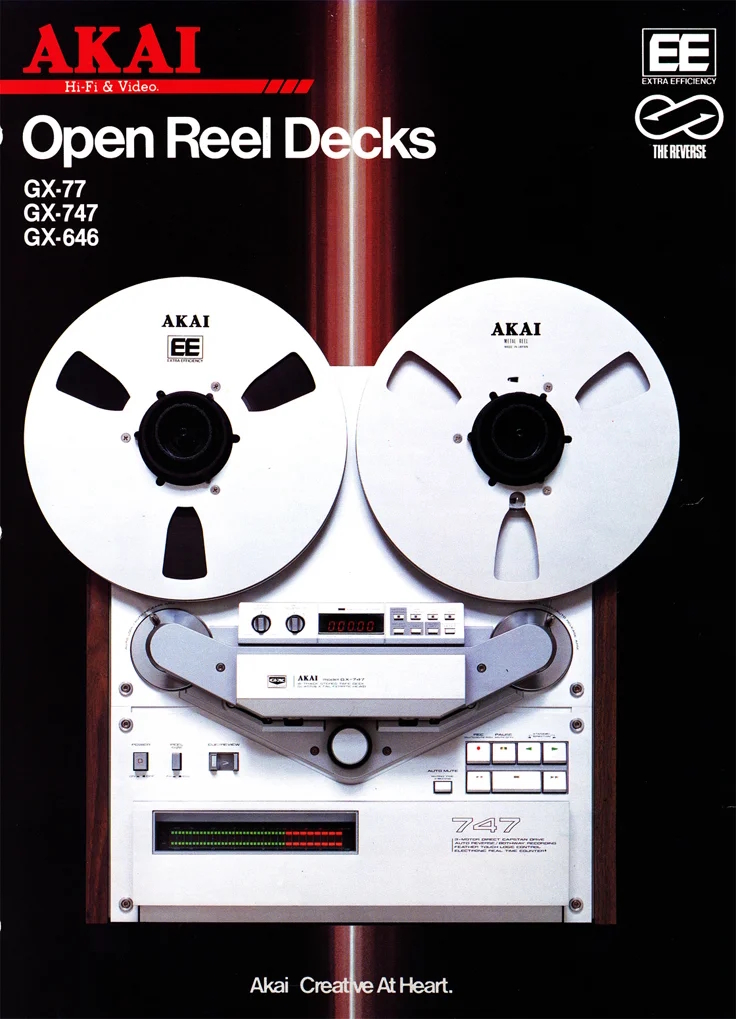
A brief history
GX-747 was manufactured between 1981 and 1984. It was a top-of-the-line tape recorder made by Akai.
Upon release, it was priced at approximately 3000 USD in today’s money.
In 1984 Akai released one more model, GX-747DBX, which was manufactured until 1988. After that, the production of open-reel tape recorders was ceased and all engineering resources were diverted to cassette decks and CD players. This marked the end of, what I think, was the greatest era in audio equipment engineering.
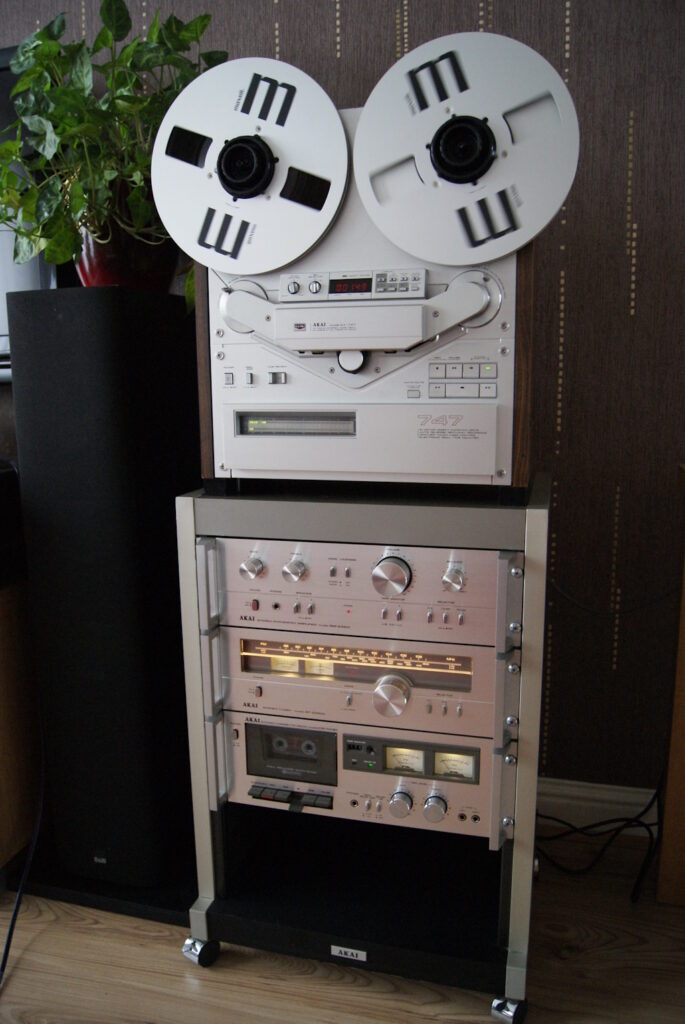
The project
This wasn’t the first time I have worked on this model of tape recorders. I have serviced two other GX-747s and one GX-747DBX prior to taking on this project. I really liked the look of GX-747 and how user-friendly it was. it could play and record both ways without the need for swapping the reels over – full auto-reverse. It could also handle Maxell EE (Extra Efficiency) tapes. Tape threading was very easy on these machines thanks to motorized tensioners. It was designed and made with an ordinary user in mind.
This particular restoration started with a unit that looked complete but clearly hadn’t run properly in years. Dust had settled deep into the transport, old grease had hardened, and the once smooth motion of the reels had become sluggish and uneven. Electrically, it powered on, but that was the end of good news.
The first step was a careful teardown. Every panel removed revealed more of the story: oxidized contacts, tired capacitors, and belts that had long since lost their elasticity. Cleaning alone took hours, meticulously removing grime without damaging delicate components. The GX (Glass and crystal ferrite) heads, thankfully, were in excellent condition, a testament to Akai’s durable design.
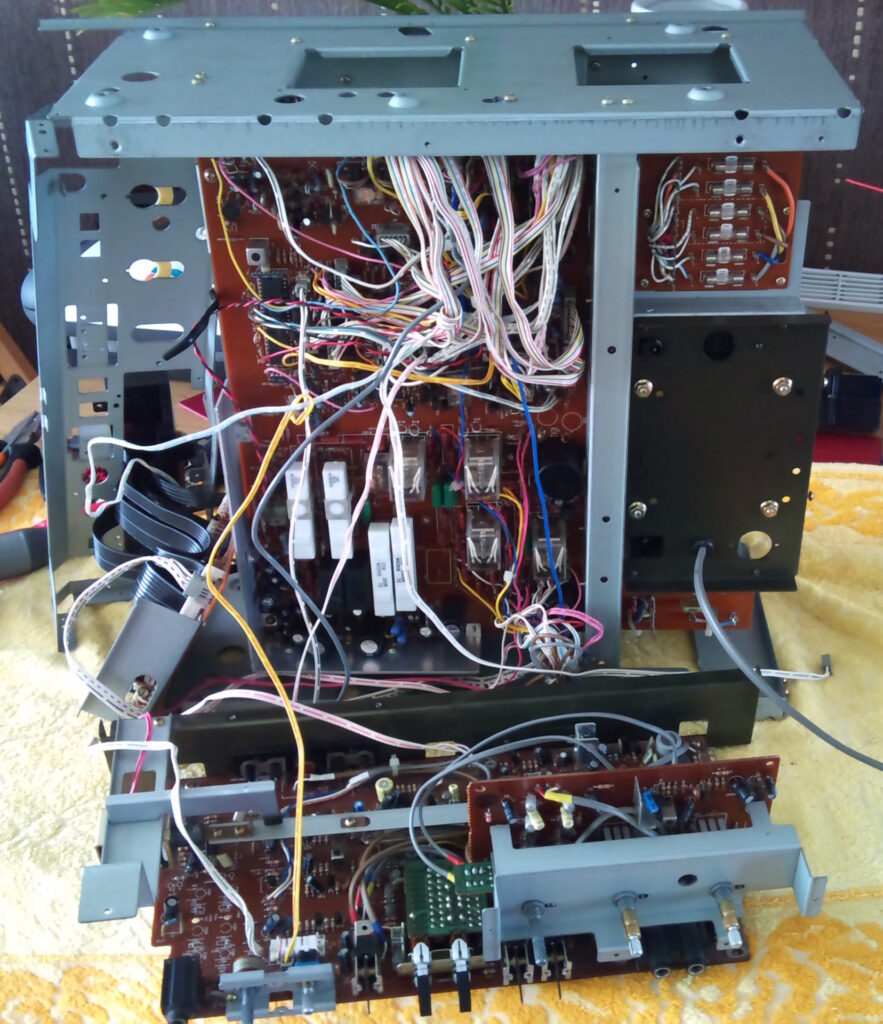
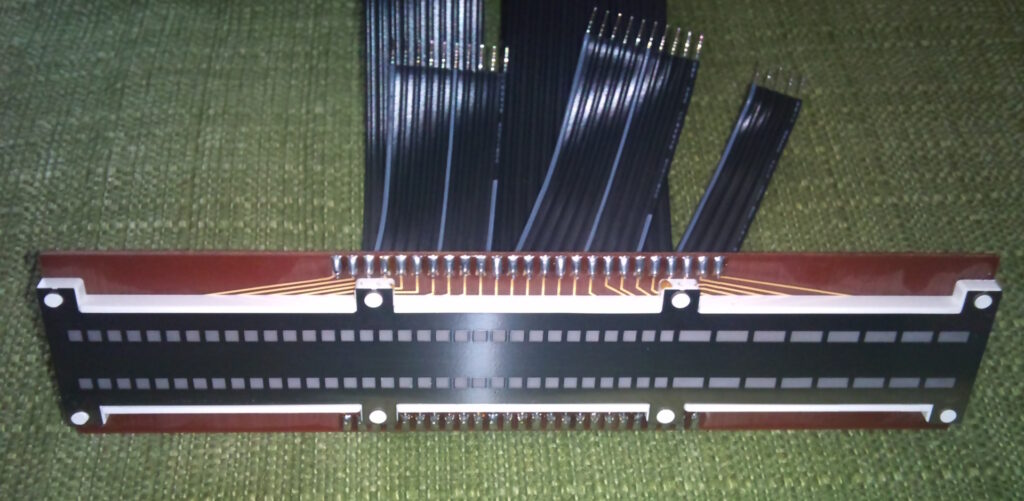
Replacing worn parts was not straightforward and it required patience. New belts, cleaning and lubrication of the capstan motor, reel motors and tensioners end deep cleaning of the pinch roller brought the transport mechanism back to life. The real challenge came in the electronics. Several aging capacitors had drifted out of spec, affecting playback stability and channel balance. Swapping these out and recalibrating the circuits made a dramatic difference.
VU meter gave me some headache too. There was an intermittent failure where the left channel peak-hold wouldn’t work from time-to-time. The culprit turned out to be broken track/pad connection on one of many diodes that were installed on the meter’s circuit board. After couple of hours of debugging – checking continuity of every connection I have managed to pinpoint the location of the failure. After fixing it, I have decided to touch-up all solder joints on the entire circuit board to ensure it will never fail again.
One of the most rewarding moments in any restoration project is the first successful playback. After alignment, calibration and testing, threading a tape and pressing play button felt like a leap back in time. The reels spun smoothly, the meters danced with confidence, and that unmistakable, warm, analog sound filled the room — rich, detailed, and alive.
Restoring the Akai GX-747 isn’t just about fixing a tape machine. It’s about preserving a piece of audio history. These decks were built to last, but they still need care and attention decades later. When properly restored, they don’t just function — they perform, often rivalling modern equipment in character and musicality.
For anyone considering taking on a project like this: be prepared for patience, precision, and a bit of detective work. But also know this — few things in audio are as rewarding as hearing music played back on a machine you brought back from the brink.
Do you have any experience with these machines? Please share your thoughts in the comments below.
Analog sound isn’t just nostalgia. It’s an experience.
Leave a Reply